

From the earliest sketches on paper to fully working mechanical systems, engineering is the bridge between imagination and reality. Engineers take abstract ideas and transform them into functional machines that solve real-world problems, improve efficiency, and expand human capability. This process involves creativity, mathematics, material science, and rigorous testing to ensure that every component works together seamlessly.
From Concept To Blueprint: Where Every Machine Begins
Every machine starts as an idea, often inspired by a problem that needs solving or a process that can be improved. Engineers begin by analyzing requirements, constraints, and desired outcomes before translating those ideas into structured concepts. This stage is where creativity meets logic, as rough ideas are refined into practical possibilities.
Once a concept is defined, engineers create detailed sketches and digital models. These representations help visualize how different parts of the machine will interact. They also allow early detection of potential design flaws, saving time and resources later in the development process.
Mathematical calculations are crucial at this stage. Engineers evaluate forces, motion, energy use, and material stress to ensure that the design is not only functional but also safe and efficient. Without this step, even the most innovative ideas could fail under real-world conditions.
Collaboration is also essential. Mechanical, electrical, and software engineers often work together to ensure that all systems within a machine align properly. This interdisciplinary approach helps turn complex ideas into cohesive designs that can be built and tested.
By the end of this stage, the idea has evolved into a precise blueprint ready for prototyping and further refinement.
Prototyping And Testing Real-World Functionality
Once a design is finalized, engineers move into prototyping, where ideas begin taking physical form. This stage is critical because it allows teams to evaluate whether theoretical designs perform as expected in real-world conditions.
Prototypes are often built using a combination of manual fabrication, automated tools, and advanced manufacturing processes. During this phase, engineers closely examine how each component behaves under stress, movement, and environmental conditions.
Testing is rigorous and repeated. Machines are evaluated for durability, efficiency, accuracy, and safety. If a prototype fails or underperforms, engineers return to the design phase, make improvements, and test again. This iterative process continues until the machine meets all performance requirements.
Feedback gathered during testing helps refine both small details and major structural elements. Even minor adjustments, such as changing a material or modifying a joint, can significantly improve overall performance.
Prototyping also helps engineers identify cost-saving opportunities. By optimizing designs early, they can reduce material waste and improve production efficiency without compromising quality.
This phase ensures that by the time a machine is ready for production, it has already been thoroughly evaluated and improved through real-world testing.
Precision Manufacturing And The Role Of Modern Technology
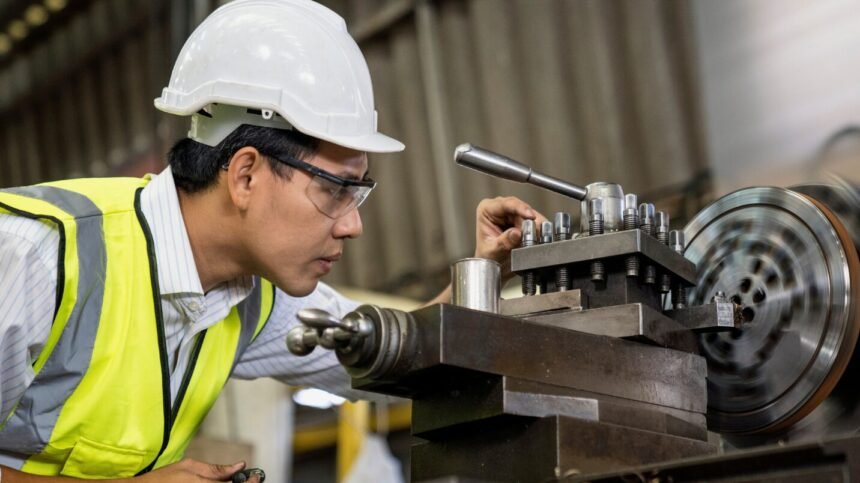
After successful testing, the focus shifts to manufacturing, where precision becomes essential. Modern engineering relies heavily on advanced tools and automated systems to produce components with extreme accuracy.
One of the most important techniques in this stage is CNC machining for robotic parts, which allows engineers to create highly detailed and consistent components. This method ensures that even the most complex parts are produced with exact measurements, reducing errors and improving reliability in final assemblies.
Manufacturing also involves selecting the right materials based on strength, weight, durability, and cost. Engineers carefully balance these factors to ensure that machines perform efficiently while remaining economically viable to produce at scale.
Automation plays a major role in improving production speed and consistency. Machines can replicate components with minimal variation, ensuring that every unit meets strict quality standards. However, human oversight remains essential to monitor processes and address unexpected issues.
Quality control is integrated throughout manufacturing. Each component is inspected and tested before assembly to ensure it meets design specifications. This reduces the likelihood of defects and ensures long-term performance once the machine is in use.
The combination of precision tools, material science, and careful oversight allows engineers to move from prototypes to fully functional machines ready for deployment.
Systems Integration And Bringing Machines To Life
Once individual components are manufactured, engineers begin the process of systems integration. This is where all mechanical, electrical, and software elements are assembled into a complete working machine.
At this stage, alignment and coordination are critical. Even if individual parts are perfectly designed, the machine will not function properly unless everything works together harmoniously. Engineers carefully assemble components while continuously checking for compatibility and performance.
Electrical systems are connected to power mechanical movements, while software systems control timing, logic, and automation. This integration allows machines to perform complex tasks with precision and consistency.
Testing continues during assembly. Engineers run diagnostics to ensure that all systems respond correctly under different operating conditions. Adjustments are made as needed to improve synchronization and reliability.
User experience is also considered during integration. Engineers evaluate how operators interact with the machine, ensuring that controls are intuitive, safe, and efficient. This step is especially important in industrial and automated environments where usability directly impacts productivity.
By the end of this phase, the machine transitions from a collection of parts into a unified system capable of performing its intended function.
Innovation, Optimization, And Continuous Improvement
Engineering does not end once a machine is built. Continuous improvement is a core principle that drives innovation and long-term success. Engineers constantly analyze performance data to identify areas where machines can be improved.
Real-world usage often reveals opportunities for optimization. Machines may be adjusted to improve speed, reduce energy consumption, or increase durability. These improvements are often implemented through software updates, material upgrades, or mechanical redesigns.
Advancements in technology also influence ongoing development. New materials, manufacturing techniques, and computational tools allow engineers to create more efficient and powerful machines over time.
Collaboration between industries further accelerates innovation. Insights from one field can inspire breakthroughs in another, leading to unexpected improvements in design and functionality.
Sustainability is also becoming increasingly important. Engineers are focusing on reducing waste, improving energy efficiency, and designing machines that have longer lifespans with minimal environmental impact.
Through continuous refinement, machines evolve far beyond their original designs, becoming more efficient, reliable, and adaptable to changing needs.
Conclusion
The journey from an idea to a fully functional machine is a complex and highly structured process that blends creativity, science, and precision. Engineers carefully move through concept development, prototyping, manufacturing, and integration to ensure that every system works as intended. Through ongoing innovation and improvement, they continue to push the boundaries of what machines can achieve, shaping technology that supports and enhances modern life.