

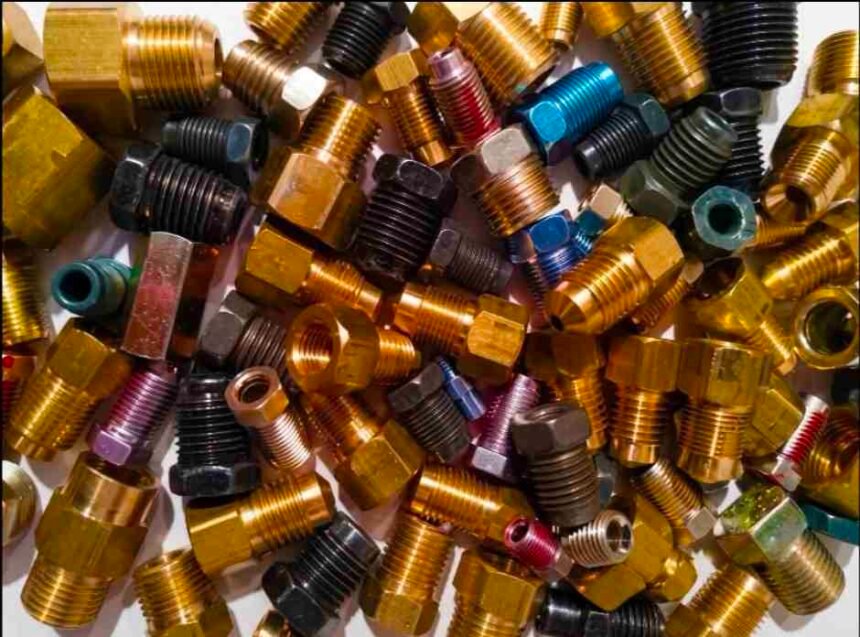
Different brake line fittings are available from manufacturers, and they might look similar if you don’t know the details about them. Tube size, thread size, and flare type are different identification points. Only checking threads might not be enough to identify the correct fitting. You also need to check the tube outside diameter, thread diameter and pitch, and flare type; all must match the mating connection.
This guide will walk you through the main brake line fitting and flare types, how to identify them, and what to check before choosing a fitting.
Brake Line Fitting and Flare Types
Brake line and fittings use different flare designs, and similar-looking fittings can have different sealing surfaces. The main fitting and flare types you may come across include SAE inverted flare, ISO bubble flare, and AN 37° flare; double flare describes how the tube end is formed.
SAE Inverted Flare
SAE inverted-flare fittings use a 45° flare-to-seat connection. They are used with automotive tube fittings. Used in automotive brake systems, including master cylinders, brake valves, adapters, and other brake components.
ISO Bubble Flare
ISO simple-flare pipes and fittings are used for hydraulic braking systems on road vehicles. Bubble flares are used on some European vehicles and also appear on some Asian and modern American vehicles and trucks.
Double Flare
A double flare describes how the tube end is formed, and the tube wall folds during the flaring process to create the double-flare shape. In automotive brake systems, the 45° double flare commonly works with an inverted-flare fitting. These connections are used in North American automotive applications.
AN 37° Flare
AN fittings use a 37° flare and a matching fitting seat. This connection is used for high-pressure fluid systems. AN 37° fittings are commonly used in high-performance builds and race cars. They can also connect to brake systems through compatible fittings and adapters. AN 37° fittings are different from the 45° flare systems used in many conventional automotive brake-line connections.
How to Identify Brake Line Fittings
You need a caliper and a thread pitch gauge for measurement, and you also need to identify the flare and seat type.
Visual Identification
Look for the flare and seat shape first to help differentiate the types of fittings. Do not depend solely on outer shape. ISO and DIN flare shapes can provide a visual clue, but confirm the fitting by checking the tube size, thread, and mating flare seat.
Measurement Techniques
Use a caliper to measure the thread diameter and tube outside diameter, and use a thread pitch gauge to identify the thread pitch. Accurate measurements will help determine the exact type of fitting needed.
- Diameter Measurement: Measure the thread diameter and the tube outside diameter separately. For a male thread, measure the outside diameter of the threads and for a female thread, measure the inside diameter of the thread.
- Thread Pitch Measurement: Use a thread pitch gauge to identify the distance between threads.
- Compare Measurements: Compare the tube outside diameter, thread diameter, thread pitch, and flare type with the fitting specifications to identify the complete connection.
How to Choose the Right Brake Line Fitting
Choosing the right brake line fitting starts with the connection already on your vehicle. You have to check the tube size, thread, flare, and fitting configuration together.
Fitting and Tube
Using a caliper, measure the brake tube outside diameter, then measure the thread diameter and use a thread pitch gauge for thread pitch. You can note down these measurements so useful when comparing them with fitting specifications.
Tube Size
First, you check the tube size OD. Tube size and thread size are both separate measurements, and the same tube size can have different thread combinations. Measure the tube before choosing the replacement fitting.
Match the Thread
Next, you should check the thread diameter and pitch. Confirm which thread system the fitting uses and compare the measurement with the fitting specification. A thread that appears to fit does not confirm that the complete connection is correct.
Match the Flare and Seat
Check the flare type, such as a bubble flare, an inverted flare, or another type, and the matching seat. The flare creates the sealing connection, so the replacement fitting needs to use the correct mating geometry. A fitting can have the correct thread and still have the wrong flare type.
Fitting Configuration
Make sure the fitting has the correct configuration for the connection. Depending on the brake system, you may need a brake line union, adapter, tee, elbow, or another fitting that connects directly to a brake component.
Confirm the Complete Connection
Before choosing the fitting, compare the tube outside diameter, thread diameter, thread pitch, flare type, and fitting configuration with the original connection. When all of these match, you have a much better basis for choosing the correct brake line fitting for your vehicle.
Conclusion
Choosing the right brake line fittings is much easier when you follow the correct steps. Use caliper and a thread gauge to measure the tube and thread dimensions. Check the tube, thread, flare, and fitting type before you make a replacement. A small mismatch can create a fitting issue.